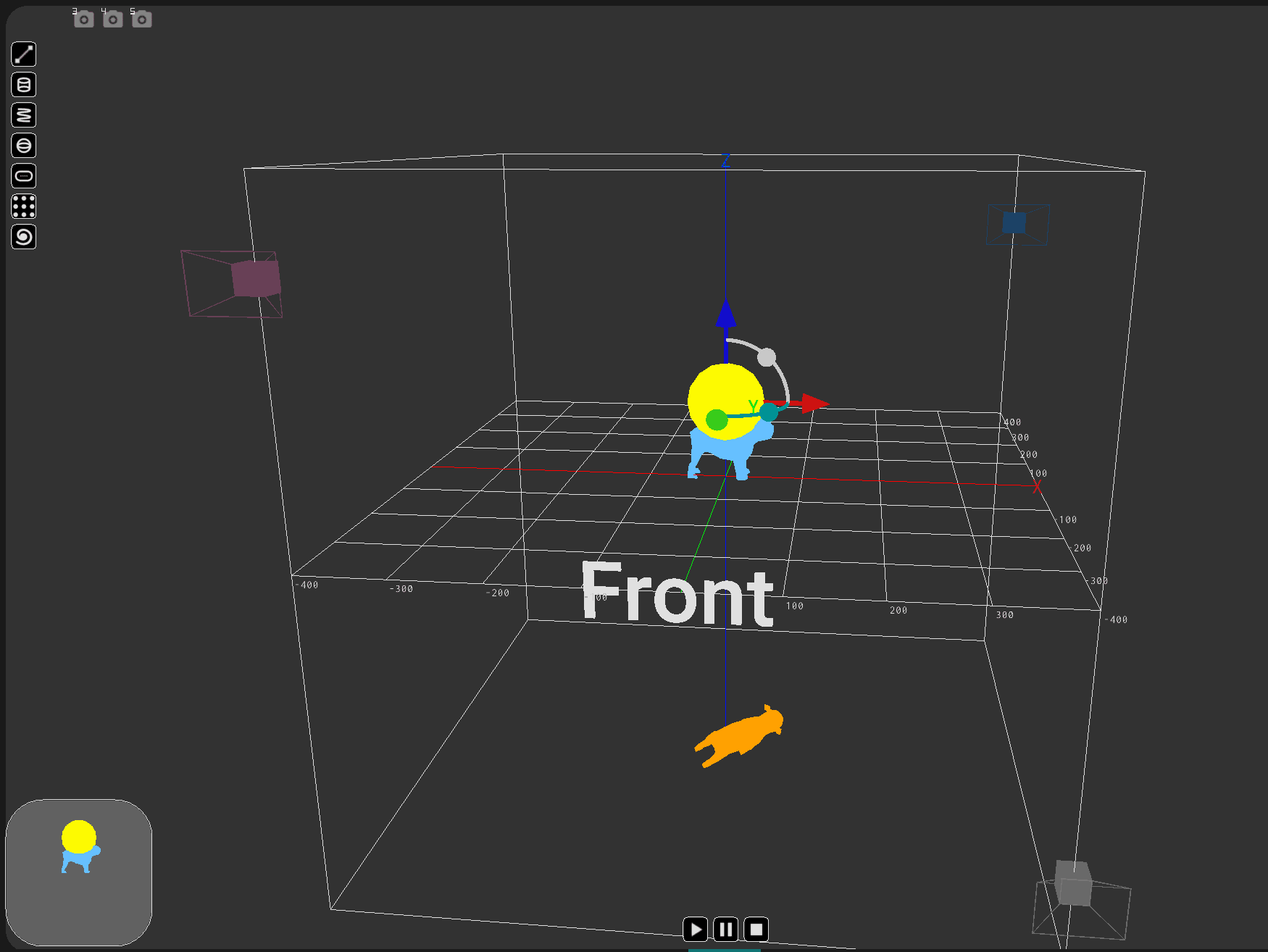
PoseForge is a 3D camera-planning tool developed through the Information Science Lab at the Yale Peabody Museum to support the digitization, archiving, and dissemination of 2D and 3D digital assets derived from natural history specimens and anthropological cultural materials. The software allows users to design custom camera paths around an object prior to digitization. Along these paths, PoseForge generates a sequence of camera poses where the system pauses to capture photographs, enabling systematic and consistent imaging of specimens from many viewpoints. By allowing technicians and researchers to visually plan and adjust camera trajectories in advance, the tool improves control, efficiency, and reproducibility in large-scale specimen digitization workflows.
My contributions to the project include migrating legacy Python imaging software to C to improve performance for high-volume 3D capture processes, as well as developing the interactive interface and visualization tools using the raylib graphics library. I implemented the user interface elements (such as buttons, sliders, and controls) and built tools that allow users to move and rotate objects within a 3D workspace while designing camera paths. I am also currently developing collision testing for camera pose paths to ensure that planned trajectories avoid intersecting with specimens or physical equipment during the capture process.